
Pine Tree shares practical, down-to-earth guidance on british conifer gardening and evergreen landscaping for readers across the UK.
- 0123456789
- Angle Bd Abdelmoumen & rue soumaya, Résidence
- [email protected]
Pine Tree shares practical, down-to-earth guidance on british conifer gardening and evergreen landscaping for readers across the UK.
 By James Harcourt
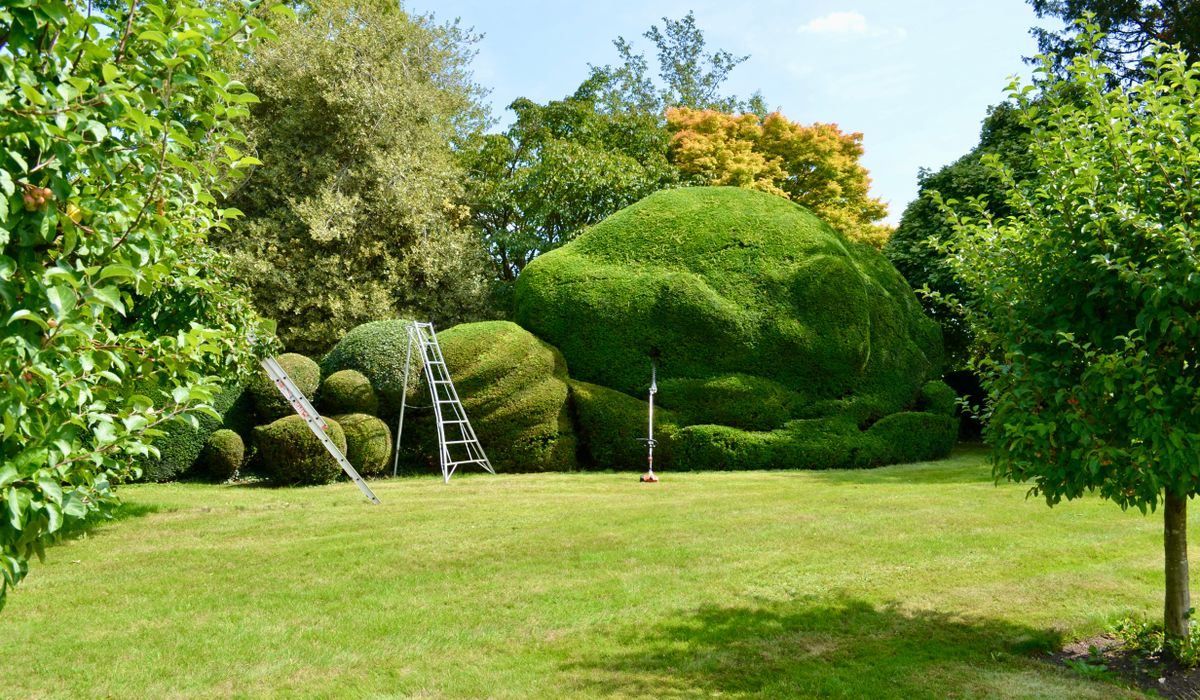
Evergreen shrubs are the backbone of a British garden. They hold their structure through the grey months, shelter nesting birds, and give borders a sense of permanence that deciduous planting simply cannot match. But that same permanence is exactly why they need care with the secateurs. Unlike a buddleia or a hardy fuchsia, which will forgive a hard chop and regrow from the base, most evergreens carry their growth on older wood and will not sprout back reliably from bare stems. Prune too hard and you are left with a woody skeleton and a bare patch that may never fill in.
The good news is that evergreen pruning is mostly about restraint. If you get the timing right and work with a light hand, you will be rewarded with denser growth, better colour, and a plant that keeps its shape for years rather than collapsing into a leggy sprawl.
Timing is the single biggest factor in whether your pruning helps or harms. The general rule for evergreens is to prune either immediately after flowering or in early spring, just as growth is starting.
Avoid pruning in autumn. Fresh cuts made in October and November do not heal before winter, and the soft regrowth that follows a mild spell is easily blackened by the first sharp frost. Also steer clear of trimming during a nesting season if birds are using the shrub — check before you start, as it is an offence to disturb an active nest.
Before you think about shape at all, clear out what is doing the plant no favours. This is the part of the job that does the most for health, and it makes the rest of the pruning far easier to judge.
Work through the shrub and cut out anything that is dead, dying, diseased or damaged. Dead wood is usually dull brown inside when you scratch the bark, and it snaps cleanly rather than bending. Diseased stems may show sunken lesions, sooty patches or dieback from the tip. Rub your blades with a little methylated spirit between cuts on infected material so you do not spread the problem around.
Cut dead wood back to a healthy side shoot or to the main framework, rather than leaving a stub. Stubs die back further and invite fungal problems. Take your time here — once the worst is gone, you will see the true shape of the shrub and where the balance is off.
Evergreens often become congested at the heart. Growth on the outside thrives, while the middle goes dark, bare and airless. That is the perfect environment for scale insects, woolly aphids and fungal leaf spot, and it is also why so many mature shrubs end up looking like hollow shells.
Your aim is to open the plant up without stripping it. Look for stems that cross and rub, stems growing steeply inward, and the oldest, thickest wood that no longer produces much foliage. Remove a few of these at the base, working evenly around the shrub, and take out no more than roughly a fifth to a quarter of the total stems in one year.
Once the structure is sound, you can think about shape. For hedges and topiarised plants such as box, yew and privet, a light trim two or three times across the growing season keeps lines crisp. For informal shrubs, a gentle tip-and-thin is usually all that is required.
Shorten the previous year's growth by roughly a third where you want a bushier habit. Trim the sides of a hedge so the base is slightly wider than the top — a batter of around 10 to 15 degrees. This lets light reach the lower leaves and stops the base going bare and brown. Use sharp, clean bypass secateurs for stems up to about a centimetre, loppers for thicker wood, and a pruning saw for anything substantial.
Never shear an entire shrub back to old, leafless wood in one go. Most evergreens will not regenerate from it, and you will be left with a permanent bald patch.
A pruned evergreen has been asked to do some work, so give it something back. A mulch of well-rotted garden compost or bark around the root zone, kept clear of the stems, conserves moisture and slowly feeds the soil. Acid-lovers such as rhododendron, camellia and Pieris appreciate an ericaceous feed in spring. A light general-purpose fertiliser in early spring suits most other evergreens, but go easy — too much nitrogen produces soft, sappy growth that aphids adore and frost despises.
Water newly pruned shrubs in dry spells through their first season, and keep an eye out for the fresh growth that follows, which is exactly what pests and fungal spores favour. A little attention now means a shapely, healthy evergreen that earns its place in the border for another decade.


We are not gonna make spamming
